


[Publicidad]


The cremated remains of Nobel Prize-winning novelist Gabriel García Márquez are making their return journey home to Colombia and starting in December will be exhibited in the Caribbean city of Cartagena where he began his writing career.
The decision to permanently exhibit the remains at colonial-era cloister in the port city's historic downtown was the result of an agreement reached between authorities and García Márquez's family, Juan Carlos Gossain, governor of Bolivar state, told The Associated Press.
While books such as "100 Years of Solitude" are infused with García Márquez's reminiscences from his Colombian upbringing, many speculated his ashes would remain in Mexico, where he lived for decades and received a state funeral following his death in 2014 at the age of 87.
Colombian friends of the author, who is known almost universally as "Gabo," celebrated the decision.
García Márquez, who was born in the banana-growing hamlet near the Caribbean, arrived in Cartagena in 1948 and immediately landed a job as a journalist at local newspaper El Universal while continuing his law studies.
The walled city was the setting for one of his best-selling novels, "Love in the Time of Cholera," and his family still maintains a seafront house there as well as a foundation established by the author to train Latin American journalists.
[Publicidad]
"These first years in Cartagena were a transcendent moment in the young writer's life," fellow writer and longtime confidant Plinio Apuleyo Mendoza told The Associated Press. "Cartagena is at the center of the vast Caribbean region that was so linked to his life, his experiences and his work."
The building where García Márquez's remains will be kept is owned by the University of Cartagena. Gossain said a bronze bust of the author sculpted by his friend, British artist Kate Murray, will be part of the exhibit.

[Publicidad]
Más información
Nación
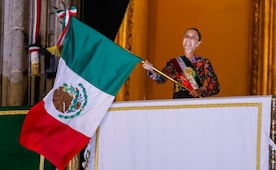
¿Quién diseñó el vestido que portó Sheinbaum durante el Grito?; bordado proviene del Istmo de Tehuantepec

Nación
¿Quién es Antonia Nava, "La Generala"?; la insurgente fue incluida en la arenga de Sheinbaum en el Grito de Independencia
Estados
Se registra explosión de pirotecnia durante el Grito de Independencia en Palenque, Chiapas; hay cuatro lesionados
Estados
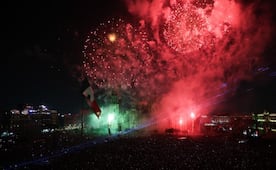
Así se vivió la noche patria; gobernadores celebran el 216 Aniversario de la Independencia