[Publicidad]


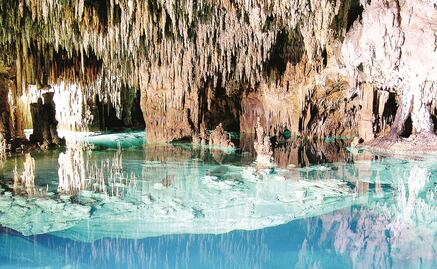
Prehispanic buildings turned into stones, ceramic remains, human and animal bones were some of the findings located in a lateral cavern in the Cenote Xlacah of the Maya archaeological site Dzibilchaltún .
Invasive fish species were being removed from the site when diver Erick Sosa identified a small entrance covered with vegetation in the northeastern part of the Cenote Xlacah.
On Twitter, Mexico's National Institute of Anthropology and History wrote in Spanish: "Find out more! Findings in a cave of Xlacah cenote in the Archaeological site Dzibilchaltún are announced."
Surrounded by the beautiful Cenote Xlacah, Dzibilchaltún is a small Maya archaeological site in Yucatán , southern Mexico , about 10 miles North of the state capital Mérida .
It should be noted that the Cenote Xlacah has been explored only twice , once at the end of the 1950s and then at the end of 1990s .
sg
[Publicidad]

[Publicidad]