










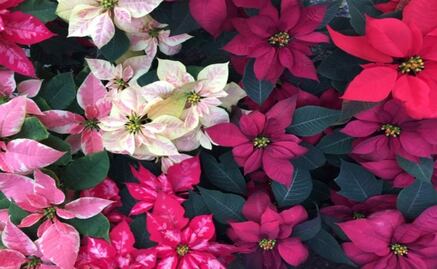
Dark green leaves with jagged edges and red, yellow, white and marbled petals, Cuetlaxóchitl , Nochebuena , or Poinsettia , is a flower of pre-Hispanic heritage and it's among the most popular Christmas symbols.
Discovered in Mexico in 1834, the red flower was originally named Cuetlaxóchitl in Nahuatl meaning "flower that withers."
The Aztecs used this plant in both celebrations and rituals as a symbol of the purity and the new life of the warriors, and they even used the flower to create reddish tints for fabrics and as a traditional medicine.
In colonial times, the Spaniards named the flower Nochebuena , due to its appearance in December , according to information from the Agency of Services for Marketing and Agricultural Markets Development (Aserca).
From the seventeenth century, it became a symbol of the holidays , but the tradition of decorating houses with this beautiful flower comes from Anglo-Saxon countries.
This year, you can enjoy thousands of beautiful poinsettias at Mexico City's zócalo. Artists created huge poinsettias , using different colors. The nearby streets are also adorned with Christmas decorations .
The garden is open to the public and will remain in the city's center until December 24.
sg

Noticias según tus intereses
[Publicidad]
[Publicidad]