


Más Información





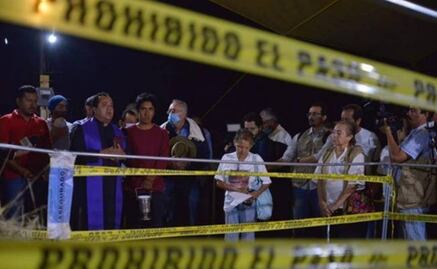
The lack of infrastructure to shelter unidentified bodies has forced Jalisco's Forensic Sciences Institute to (IJCF) to keep 157 bodies in the refrigerated container on the back of a trailer that has been wandering Guadalajara's metropolitan area , as they don't have the adequate space to preserve the bodies.
Last Thursday, the trailer was in a warehouse in La Duraznera neighborhood , in the Tlaquepaque municipality, but after the neighbors complained of unpleasant odors, M aría Elena Limón, the municipal president , asked the state government to move the trailer and gave them a 48-hour notice.
The mayoress explained that she learned about the presence of the vehicle after the neighbors reported it, and after the municipality's personnel inspected it, they tried to close the warehouse as it didn't have the necessary permits . Nevertheless, state police forbid them from placing the closure seals.
On Friday, the state government decided to move the container to an open area in the Tlajomulco municipality . Through social media, the neighbors complained about the odor and questioned the authority about the situation.
The Tlajomulco government complained, and the container was moved once again, and place it in a warehouse in Guadalajara's industrial area.
The Human Rights State Commission ( CEDH ), opened an investigation and reminded the IJCF that in its 3/2018 general recommendation, they had requested the Institute and the State's General Prosecutor (FGE) to open a forensic cemetery to carry out, according to the protocols , the controlled and individual burials of the bodies or remains.
The CEDH also indicated that they must register the bodies' complete information , including the DNA genetic profiles.
Nevertheless, the construction of the forensic cemetery began last August in the Tonalá municipality , but the work stopped in early September after the neighbors from nearby communities complained.
Although the nearest neighborhood is 0.62 miles away , the state authority decided to stop the construction until there is an agreement with the neighbors, who consider they will be affected by the odors and the violence it could generate in case a criminal group wants to recover a body .
The cemetery could keep up to 800 bodies ; the construction would be completed in two months, but after these complications, it's unknown when will it be ready.
gm

Noticias según tus intereses
[Publicidad]
[Publicidad]