


Más Información
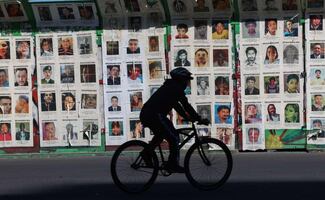







Promoting cycling in Mexico City would not only reduce pollution and traffic congestion, but also social inequality at the capital city, said Charles Palmer, specialist of Sheffield University's School of Architecture who is conducting a research on the use of this means of transport in megacities such as Lagos (Nigeria), Dhaka (Bangladesh) and Shenzhen (China).
"Besides being healthy, sustainable and environmentally friendly, riding bicycle is cheap and reduces political and social inequality," Palmer said to EL UNIVERSAL.
"In the case of Mexico City, it would contribute to reduce the social pressure of working to buy a car,” he added.
In his opinion woman cyclists are much less vulnerable to harassment compared to public transport or even walking.
Palmer, who holds a scholarship of the Royal Institute of British Architects, said that preliminary results of the study have shown that unlike other metropolis, Mexico City has great potential to develop cycling because of its weather and streets.
"Nevertheless, cyclists still face many disadvantages in Mexico City," Palmer said, such as lack of proper infrastructure and a culture of respect from drivers.
To increase the use of bicycles, he suggests to create routes that connect neighborhoods with subway and metrobus stations, which would contribute to end Mexico City's international reputation of being dependent on private vehicles.

Noticias según tus intereses
[Publicidad]
[Publicidad]