


Más Información







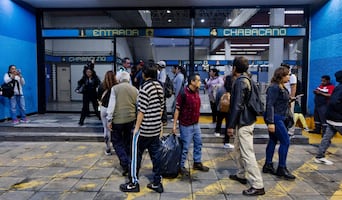
According to the Mexican Institute of Competitiveness (IMCO) Mexicans spend 19% of their salary on transport (around MXN$1,815 a month) and Mexico is the country that invests most in this sector among OECD members.
Said costs may be even higher for citizens living in the outskirts of big cities. It is estimated that these people spend up to 22.4% of their salary on transport and lose several productive hours in commutting to their workplaces.
These amounts are tremendous when compared with resources devoted to transport in other countries that belong to the OECD. In India and Canada, for example, citizens spend around 16% of their salary on transport; in Russia, it’s 13%, and in Korea and Japan, it’s barely 12%.
Furthermore, the IMCO reminded that time lost commuting in Mexico City is equivalent to MXN$33 billion in productivity each year. This is mostly due to inefficiency in transport.
Said amount is similar to the budget that was given to the Ministry of Public Security in 2018, as well as the Ministry of Health, and the Ministry of Government in Mexico City.
Efficient mobility is essential to achieve sustainable economic growth, according to IMCO.
The Mexican Institute of Competitiveness studied the transport ability of 20 of Mexico’s most important cities, as well as their capacity to provide alternative means of transport.
Said analysis indicated that the Valley of Mexico, Saltillo, and Guadalajara were the most competitive cities in terms of transport, or the least bad. Whereas Villahermosa and Acapulco were the worst in transport competitiveness.
In view of this situation, the IMCO called on governments to design and implement strategic mobility plans that prioritize pedestrians, since this would have a favorable impact on regional economic development, the purchasing power of families, health, and social equity among Mexicans.
They recommended that individual transport alternatives offered by private digital platforms, such as scooters and bikes, should be incorporated and encouraged by both state and municipal authorities.
“Regulations should not create barriers for this type of initiative,” stated IMCO data analyst Óscar Ruiz.
Said costs may be even higher for citizens living in the outskirts of big cities. It is estimated that these people spend up to 22.4% of their salary on transport and lose several productive hours in commutting to their workplaces.
These amounts are tremendous when compared with resources devoted to transport in other countries that belong to the OECD. In India and Canada, for example, citizens spend around 16% of their salary on transport; in Russia, it’s 13%, and in Korea and Japan, it’s barely 12%.
Furthermore, the IMCO reminded that time lost commuting in Mexico City is equivalent to MXN$33 billion in productivity each year. This is mostly due to inefficiency in transport.
Said amount is similar to the budget that was given to the Ministry of Public Security in 2018, as well as the Ministry of Health, and the Ministry of Government in Mexico City.
Efficient mobility is essential to achieve sustainable economic growth, according to IMCO.
The Mexican Institute of Competitiveness studied the transport ability of 20 of Mexico’s most important cities, as well as their capacity to provide alternative means of transport.
Said analysis indicated that the Valley of Mexico, Saltillo, and Guadalajara were the most competitive cities in terms of transport, or the least bad. Whereas Villahermosa and Acapulco were the worst in transport competitiveness.
In view of this situation, the IMCO called on governments to design and implement strategic mobility plans that prioritize pedestrians, since this would have a favorable impact on regional economic development, the purchasing power of families, health, and social equity among Mexicans.
They recommended that individual transport alternatives offered by private digital platforms, such as scooters and bikes, should be incorporated and encouraged by both state and municipal authorities.
“Regulations should not create barriers for this type of initiative,” stated IMCO data analyst Óscar Ruiz.

dm

Noticias según tus intereses
[Publicidad]
[Publicidad]