


[Publicidad]


Celebrated on November 1 and 2 , Day of the Dead has become one of Mexico’s best-known traditions in the world because of its cultural relevance and its colorful imagery. It was declared as Intangible Cultural Heritage by UNESCO .
As part of this year’s celebrations, there will be a monumental altar at Mexico City’s main square, best known as Zócalo .
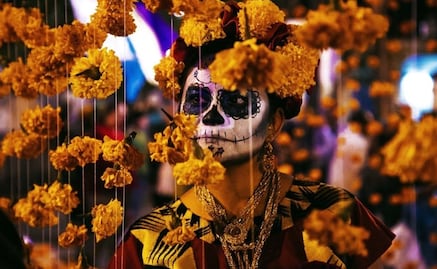
The Day of the Dead Offering was a celebration of life for the Aztec civilization. For them, the place where the dead went depended on how they had died: Tlaloca (the God of Rain’s paradise) for those who drowned; Omeyocan (the Sun’s paradise) for those who died in combat or women who died giving birth; Chichihuacuauco for children, and Mictlán for those who had a natural death.
Each element in the “ofrenda” has a special meaning to contribute to the outward and return journey for the dead who return to the world of the living to be, once again, with their loved ones .
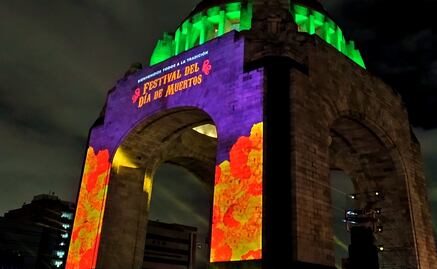
For ten years now, the “Gran Ofrenda” of the Day of the Dead looks to rescue and promote Mexico’s traditions.
The monumental altar will be inaugurated on November 1 at 13:00 and it will be on display until November 11 . There will be a special artistic and cultural programming that will show Mexico City’s great diversity.
[Publicidad]
Mexico City’s Culture Ministry
informed that the project “Altar of altars,” by Vladimir Maislin Topete was selected for this year’s celebrations.
The installation wants to shows the diverse traditions surrounding Day of the Dead in all the country , a whole journey around Mexico concentrated at Zócalo. The altar will have four cardinal points with beautiful "ofrendas" from different regions of the country. “Altar of altars” will include regional handcrafts, “papel picado,” hand-painted rugs, audio and lighting with mobile mechanisms, and a structure made from recycled wood.
[Publicidad]
mp

[Publicidad]
Más información

Metrópoli
Vinculan a proceso a sujeto por atentar contra la intimidad sexual de adolescente; permanecerá en prisión preventiva

Metrópoli
Somos CDMX alerta por deepfakes rumbo a las elecciones de 2027; pide evitar campañas de desinformación

Universal Deportes
Portero denuncia que la mafia quería que recibiera tres goles y lo amenazó de muerte

Mundo
Irán se une a festejos patrios; iluminará la Torre Azadi por aniversario de la Independencia de México