


[Publicidad]


In its 67th edition , the San Sebastián Film Festival in northern Spain will offer a cinema retrospective of Roberto Gavaldón , one of the most important Mexican directors from the 1950s and 60s, known for “ Macario ,” the first Mexican film to win an Oscar nomination .
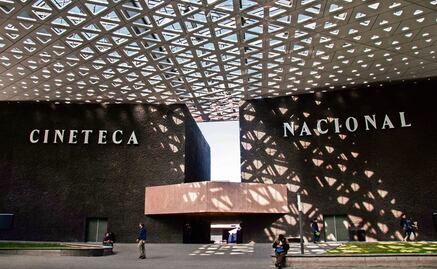
The film series will be composed of 25 titles , many of which have been restored and remastered by Mexico’s National Film Library and the National Autonomous University (UNAM) . Following their projection at the festival, the films will be available to watch at Madrid’s Spanish Cinematheque in October and November.
Born in Jiménez, Chihuahua in 1909, Roberto Gavaldón started his career in the film industry working as an extra, actor, assistant director, and screenwriter. After a couple of jobs co-directing, he made his debut in 1945 with “ La barraca ” ( The Barrack ), a film adaptation of a novel written by Vicente Blasco Ibáñez .
The Spanish festival stated through a press release that, from the very beginning, Gavaldón showed a unique style that was “both sober and classic, realistic in style, benefiting from his collaboration with well-known photography directors such as Gabriel Figueroa, Alex Phillips, and Jack Draper. ”

“Macario” (1960)
, one of his most important films, participated in the Cannes Film Festival . It featured Ignacio López Tarso , who had also worked with Luis Buñuel in a movie called “Nazarín.”
[Publicidad]
Gavaldón also worked with other legendary actors of Mexican cinematography such as María Félix, Dolores del Río, Arturo de Córdova, and Pedro Armendáriz , as well as the Argentinian star Libertad Lamarque.
He kept working until 1979, when he launched his last film: “ Cuando tejen las arañas ” (When Spiders Weave their Webs). He died seven years later in Mexico City.
dm
[Publicidad]

[Publicidad]
Más información

Destinos
5 lugares cerca de CDMX para este fin de semana

Estados
Madre e hijo mueren tras incendio en Torreón; investigan si fallecieron por intoxicación

Descubre y Compra
Jueves de 2x1 en Ticketmaster; 5 conciertos imperdibles para aprovechar la promoción

Nación
Sheinbaum respalda decisión del INE contra publicaciones del PRI sobre Morena; aún pueden impugnar la resolución, asegura