


Más Información







The eruption of the Fuego volcano in Guatemala last Sunday afternoon took Guatemalans by surprise, with a death toll of more than 60 people so far. Dozens more have gone missing, and many homes have been destroyed.
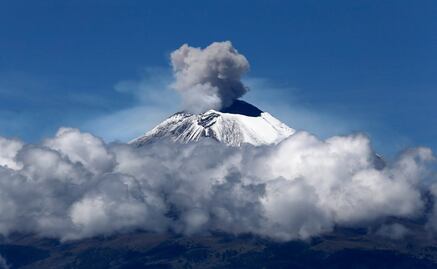
There is a sleeping giant in Mexico as well: The Popocatépetl volcano , with an elevation of 5,426 meters (17,802 feet). Should this volcano erupt, its damages could affect more than three states.
The Geophysics Institute of the National Autonomous University of Mexico (UNAM) recently updated their study called “Hazards Map for the Popocatépetl Volcano,” with the purpose of preparing an evacuation plan in case of an emergency. The document specifies the states that are most in danger: Puebla, State of Mexico, Morelos, Tlaxcala, and Mexico City.
The investigators outline several scenarios depending on the magnitude of the potential catastrophe.
In the worst case , the areas of Atlixco and San Juan Tejupa, both located in the state of Puebla, would be the most damaged, as well as Amecameca and Metepec, located in the State of Mexico.
In a medium-damage panorama , places such as Tochimilco, Coyula, Ozumba, Xalitzintla, and Tehuixitlán would be affected; certain municipalities from the state of Puebla and the State of Mexico would be the most damaged.
In case of a very mild volcanic eruption, very few places are listed with serious impacts, but the areas of San Pedro Benito Juárez, Tochimilco, and Nexapa would be the most affected.
The map also includes results from several simulations for the route that the lava is likely to follow and even places where ashes and even avalanches could fall.

A map that shows the areas representing risks in case of an eruption - Photo: Courtesy of the Geophysics Institute of UNAM
These areas were identified with different colors depending on the risk they represented.
dm

Noticias según tus intereses
[Publicidad]
[Publicidad]