








Rosseta
has complemented her three-month training and she is already patrolling airports, ports, and borders to prevent the entry of quarantine or rare diseases that could risk the agricultural heritage of Mexico .
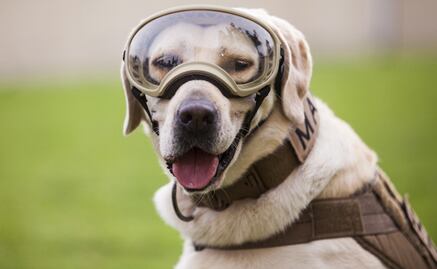
This pup is only two years old and joined the team of canine binomials at the Canine School from the National Health Service, Food Safety, and Food Quality (Senasica) .
Rosseta has shown she is quite talented by sniffing over 100 suitcases from an international flight in 10 minutes , in contrast, it takes an inspector 60 minutes to carry out the same task.
Ricardo Reyes Balvanera
, an expert from the Clinical, Preventive Medicine, and Surgical Area from the Canine School explained that was rescued from a person in the state of Pachuca, Hidalgo because she was apparently hit with a machete or a stick and lost her left eye.
“ Rosseta doesn't care that she doesn't have an eye, she works as efficiently as any other dog (…) and now she serves Mexico ” in the detection products regulated by the Ministry of Agriculture and Rural Development (Sader) , in order to prevent the entrance of diseases such as the foot-and-mouth disease, African swine fever , among other diseases.
The risks of theses diseases entering Mexico will always be there because of the large number of people arriving in Mexico every day, and although her work is “barely known and recognized,” it is important for the health and food safety.
The vet explained that Rosetta, along with Jacko, Quiko, and other 23 pups are trained to detect five basic smells: citric, mango, apple, pig, and beef, as these are the most common products brought over by those who arrive into Mexico's airports and other entry ports .
All these pups have been chosen because they ar e friendly, playful , and have a sweet tooth .
Verónica Montes Trejo
, a vet, agreed that Rosetta is ready to follow into Jacko's steps, a Belgian Shepherd who has been working in the borders in Chiapas and Baja California and now he will check every suitcase that arrives into Mexico City's International Airport.
The Canine School under the Senasica started operating in 2007 . It now has 103 pups to work at Mexico's borders.
These incredible pups now work in 17 states and have been an example to train other pups in Guatemala, Panamá, and Nicaragua.
In 2018 alone, the pups alerted about 215,000 suitcases ; 119,364 contained products they had been trained to sniff and alert about.
gm

Noticias según tus intereses
[Publicidad]
[Publicidad]