


Más Información






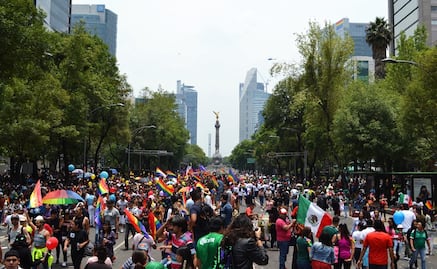
This summer, the LGBTTTIQ community of Mexico celebrates its fourth decade occupying the streets of Mexico City during the Pride March , an event that has become a celebration of diversity while still taking into account the struggles and objectives that gave birth to it. Each year, thousands of people leave prejudice aside and dress in the colors of the rainbow.
At an interview with EL UNIVERSAL, Salvador Irys , activist and director of the International Festival of Sexual Diversity (FIDS) told that the community's decision to become noticed in Mexico "had to do with the Stonewall riots , but also with the Mexican Student Movement of 1968 . I think that, all over the world, there was a spirit of freedom and rebellion: There was the Prague Spring, Martin Luther King in the USA , the hippie movement, the feminist movement. I think it all formed a fertile breeding ground for the gay movement to come to light in this country. People were becoming aware of the otherness, and of how they were being discriminated for being different. It was an ideal context to let people know that we have always existed in every corner of the world, and that we also had to make ourselves present."
According to Salvador Irys, this initiative "was born out of a group of people becoming aware of their condition, and of the violence and repression they suffered. In having their human rights denied, they started wondering: 'Why can't I go out freely and be who I am?'; famous activists such as Nancy Cárdenas, Juan Jacobo Hernández, Yan María Yaoyólotl, and Claudia Hinojosa began organizing clandestinely, making gatherings in small houses and such."
Nowadays, Salvador considers that the Gay Pride March has become extremely eclectic, "with thousands of people marching for different though valid reasons. People don't only go there to strip or show themselves in provocative ways; there are also families asking for recognition, people supporting their sons and daughters, college students, religious groups, and even political parties. It has become a space for everyone to share, but the most important part is still to make ourselves visible, because we've been struggling for many years. The number of hate crimes and unjustified dismissals against the LGBTTTIQ community is quite large, even today. People coming from other states in Mexico, places where gays, lesbians, and transexuals have their human rights violated systematically, come here to this event and see what's happening in the city, and suddenly, they don't feel alone ."
dm

Noticias según tus intereses
[Publicidad]
[Publicidad]