


[Publicidad]


The intense rains that occur in the state of Oaxaca not only bring floods, but also the famous ants known as chicatanas , which are considered a delicacy in Oaxacan gastronomy.
These are the queens of the ant genus Atta , which emerge from the earth once a year after heavy rains between June and July , and even August .
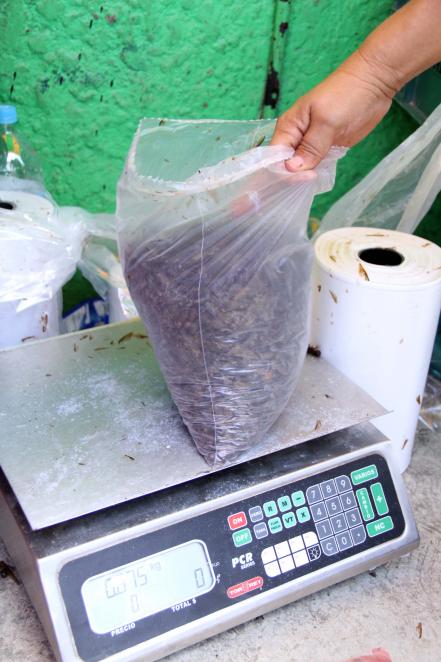
Although they can be found in the states of Puebla, Chiapas, Veracruz, and Hidalgo , they are most famous in the state of Oaxaca, where they are sold up to a thousand pesos a kilogram .
The most traditional way of cooking these popular ants is in a sauce prepared in a molcajete , the Mexican version of the mortar and pestle, which is then enjoyed with handmade tortillas and with a piece of cheese.
They can also be prepared in mole with chicken, armadillo or pork meat; but you can not miss the specialty of the Oaxacans, the tamales , which are made with corn dough, wrapped in banana leaves and cooked in clay pots.
The dishes with chicatanas are most popular in the regions of the Coast, Central Valleys and the mountainous regions of the state.
[Publicidad]
Their consumption has transcended borders and has already reached the United States and other countries, which share this gastronomy; they are also sold in the famous market of San Juan in Mexico City .
Activity that unites families
The inhabitants of this entity already know that the chicatanas leave when the insects begin to cut the leaves of the plants at their reach and take them to their nests.
[Publicidad]
Before this, the Oaxacans are prepared with plastic boots, containers, and lamps.
Night falls and no one can sleep, waiting for the time to head to the countryside and capture this long awaited food. Once it is midnight, children and adults leave their homes.
They arrive at the countryside and begin to examine the anthills. Sometimes they have to wait until 4 or 5 in the morning until they come out.
[Publicidad]
Once the chicatanas leave their nests, the arduous and fun work begins. Some people put their feet in buckets with water, to avoid being bitten by them.
To remove the wings from the queens, the Oaxacan women put them in a comal and add a pinch of salt; the ants are removed from the comal until they are well toasted and ready for consumption.
The indigenous grandmothers of the Coast say that the chicatanas have to be grounded in a metate or in a molcajete in order to be delicious.
[Publicidad]
Since ancient times , Oaxacans sell the chicatanas in their homes or in the markets, but there are also some who keep them for themselves to consume them throughout the year.
The Oaxacan gastronomy charms nationals and foreigners , because they still preserve the secrets that their ancestors inherited to them.
mr
[Publicidad]

[Publicidad]
Más información

Mundo
Rebeldes hutíes de Yemen dicen haber atacado una base militar en Arabia Saudita; Riad apoya a fuerzas del gobierno yemeníes

Universal Deportes
Dafne Quintero gana plata en Saltillo, tras una dramática final ante Alexis Ruiz

Nación
Aseguran casi media tonelada de dextrosa anhidra en aduana de Manzanillo; es usada como precursor químico de drogas

Nación
Diputado del Verde busca destitución del cónsul Rutilio Escandón; acusa que está bajo investigación por nexos con el narco