


Más Información







The Ministry of Communications and Transport (SCT) said that the satellite services that the "Centenario" was to provide are guaranteed with the upcoming launching of the Morelos III planned for October from Cape Canaveral, Florida.
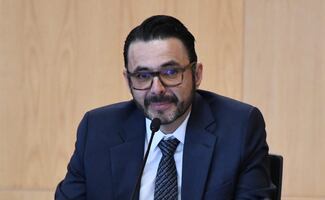
In a press conference, the Minister of Communications and Transportation, Gerardo Ruiz Esparza said that the failed launch from the Baikonur cosmodrome in Kazakhstan was hired in February 2012, and the current administration could not cancel it.
"It was an existing contract that, if not honored, would have represented a US$60 million loss. There was no alternative but to follow with this contract," expressed Ruiz Esparza.
He added that the aerospace industry is a high-risk enterprise.
The total cost of the loss of the satellite amounts to UA$300 million for the satellite and US$900 million for the launch.
However, the Mexican government will not lost a single dollar because both the satellite and the launch were insured.
"The Ministry took the provision of ensuring the satellite in a 100%. The total amount can be recovered," expressed Ruiz Esparza.
The maker of the satellite, Boeing, will take between 36 and 38 months to make another satellite, with the same specifications as the Centenario.
For his part, James Kramer, vice president of International Launch Services (ILS), the company responsible for the launch, apologized to Boeing, the Mexican team involved in the launch and the people of Mexico, for the accident.
"The launch was on time, the first phase was fine, the second was well, but when we turned on the third stage, after 490 seconds from takeoff, a malfunction caused the collapse of the mission," expressed Kramer.
The Proton M rocket failed to bring the satellite into orbit and it fell in the far east of Siberia.

Noticias según tus intereses
[Publicidad]
[Publicidad]