


Más Información


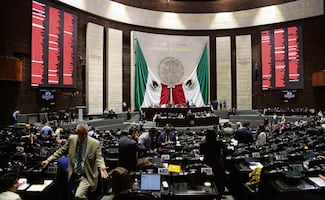





Mexico’s Central Bank
( Banxico ) established that inflation may increase as a result of the recent earthquakes that hit Mexico , an 8.2-magnitude quake on Thursday, September 7 followed by a 7.1-magnitude quake on Tuesday, September 19 resulting in supply shortage and price increases in the short term.
Banxico said in a statement that the earthquakes, along with Hurricane Harvey and Hurricane Irma , will have a transient and moderate effect on inflation and the country's economy.
The statement did not specify which products will be affected, yet it mentioned that the prices of agricultural goods may increase transitionally.
On September 22 , Mexico National Institute of Statistics and Geography ( Instituto Nacional de Estadística y Geografía abbreviated INEGI ) informed that the annual inflation stood at 6.53% in the first half of the month representing a turning point since at the end of August it reached 6.66% .
Banxico expects the trend to intensify in order to reach its inflation goal of 3% by the end of 2018 .
The financial institution assured that even though there is not enough information available yet, the effects of inflation and economic activity will be moderate and temporary.
sg

Noticias según tus intereses
[Publicidad]
[Publicidad]