


Más Información
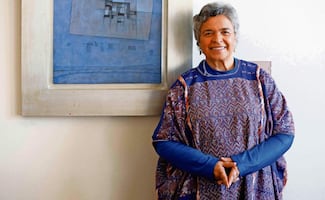




“ The Great Mayan Aquifer is not only water, but it is also an enormous place or archeological reservoir . The first settlers in America are present on this site. In America , there are less than 60 skeletons of early men and there are 12 in the Great Mayan Aquifer ,” said archeologist Guillermo de Anda.
Guillermo de Anda, along with other researchers, presented the exploration works that have been carried out as part of The Great Mayan Aquifer Project ; in addition, academics gave conferences about water in the Mayan culture during the First Great Mayan Aquifer Archeology Colloquium .
Have you heard of the
meeting the digital world?

The gathering, that took place in the National History Museum at the Chapultepec Castle , was presented by Pedro Francisco Sánchez Nava, national coordinator of Archeology of the National Anthropology and History Institute (INAH) , who said the colloquium took place in the framework of the 80 years of the institute and the 60th anniversary of the exploration of the Balankanché cave, located in Chichén Itzá.
Have you heard of
?
Guillermo de Anda, the archeologist in charge of the Great Mayan Aquifer project, talked about the last two years of work in-site, time in which they have determined that, until now, the aquifer is made up of 1,650 km of mapped aquatic networks, in which they found human remains and ceramics , as well as pieces of pine tree, a material he denominated as “foreign.”
Last March , De Anda revealed how they discovered the Balamkú cave . In this space, located 2.7 km from the Kukulcán pyramid , they found pots.
Have you heard there are
in the Mayan train route?
“In one of these pots, there were remains of organic material that we put to Carbon 14 tests and the result we just obtained is that the cave was [part] of a desecration ritual . Many artifacts that are preserved in there contain whatever was burnt for the smoke to reach deities. There was great despair to bring rain because we have the presence of the god of rain, Tláloc , who is a foreigner god, and we are trying to figure out why,” said the INAH archeologist .
Guillermo de Anda pointed out that as part of the Great Mayan Aquifer , they are searching for a fifth cenote and that it could be in Chichén Itzá .
“We know about this fifth cenote thanks to the geophysical methods René Chávez, a researcher from the Geophysics Institute of the National Autonomous University (UNAM) , has detected,” he explained, however, he said they are still looking for the entrance.
Did you know there is
?
mp

Noticias según tus intereses
[Publicidad]
[Publicidad]