


Más Información
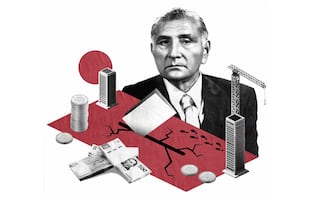







Mexican Central Bank (BANXICO) deputy governor Javier Guzmán said on Friday that it was "impossible to say" whether the bank's rate hiking cycle was over after it unexpectedly pushed its benchmark interest rate last month up by 25 basis points to an eight-year high of 6.75 percent.
"We are watching the evolution of demand pressures, and if necessary we will be reacting," Guzmán said in an interview outside a meeting organized by the U.S.-Mexico Chamber of Commerce in New York.
Guzmán said it was possible the economy would require more hikes in 2017. But he said he expected Mexico's inflation to begin declining significantly in the second half of the year.
Price shocks from the start of the year, including a sharp increase in gasoline prices, drove Mexico's inflation rate to 6.17 percent in the year to mid-May, its fastest annual pace in more than eight years.
The country liberalized state-controlled gasoline prices at the start of the year, driving them up as much as 20 percent.
Guzmán said it was those pressures along with an increase in merchandise and agriculture prices and what he called a significant depreciation of the Mexican peso that led to the country's elevated inflation.
The easing of those shocks, coupled with the bank's string of aggressive rate hikes, should help lead to a sizable reduction in inflation, he said.
He also pointed to the appreciation of the Mexican peso against the dollar after it sunk to a record low of MXN$22.03 pesos per dollar in January amid uncertainty over U.S. President Donald Trump's policies toward Mexico.
Last month, it rose to about MXN$18.34 pesos, its strongest since Trump's election last November, and was last trading at MXN$18.61 pesos per dollar.
"As a result of arithmetic, we should have (starting in) the beginning of next year a sharp decline in inflation," Guzmán said.
Agustín Carstens, who heads the Mexican central bank's five-member board, said in a radio interview on Friday that the inflation spike would have been higher if the bank had not raised interest rates in recent months.
"Given that we've raised interest rates by 375 basis points, together with possible future actions by the bank," he said, "we think we're going to begin a tendency of convergence in inflation, in such a way that we're very close to our objective of 3 percent toward the end of 2018."
bg

Noticias según tus intereses
[Publicidad]
[Publicidad]