


Más Información
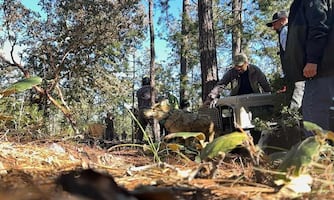






Scientists have begun drilling for core samples, nearly 5,000 feet below the seabed, of a prehistoric crater caused by an asteroid collision that is linked to the extinction of dinosaurs.
Some scientists believe the asteroid, and perhaps other factors, may have led to the end of dinosaurs. The theory that their demise 66 million years ago was linked to the asteroid impact was first proposed in 1980. The biggest piece of evidence is the 110-mile (180-km) crater near Chicxulub in Mexico.
During the two-month expedition the international team of scientists will look for clues about how life recovered after the impact and whether the crater could have been a home for microbial life.
"The impact caused the extinction of some 75 percent of species that existed in that period," said Dr Jaime Urrutia-Fucugauchi, of the Institute of Geophysics at the National Autonomous University of Mexico.
"It marks the transition of what colloquially, we know as the era of the dinosaurs to the era of the mammals."

Noticias según tus intereses
[Publicidad]
[Publicidad]