


Más Información


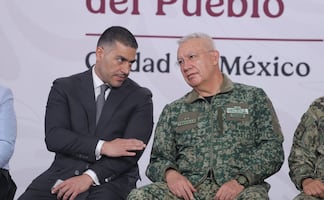
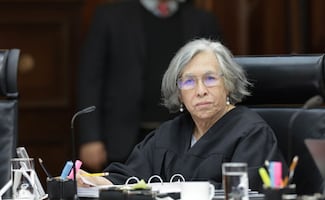


Arturo Escobar y Vega, Undersecretary for Prevention and Citizen Participation of Mexico's Ministry of the Interior, ruled out regulating marijuana for recreational purposes as proposed by Arturo Zaldívar, Minister of the Supreme Court of Justice.
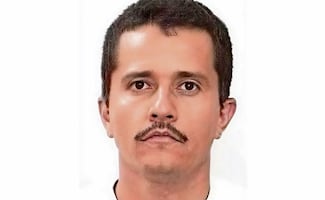
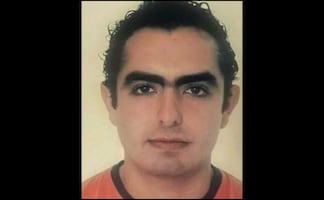
“Mexico can not turn 'El Chapo' or 'La Barbie' into businessmen,” Escobar said in an interview with EL UNIVERSAL referring to Joaquín Guzmán and Edgar Valdez. However, he added that if the United States, Canada and the United Nations decide to liberalize marijuana laws, discussing the subject will become necessary so that “we solve scientifically the positive and negative consequences of liberalizing it.”
Escobar explained that the administration of President Enrique Peña Nieto will leave a legacy in terms of prevention as a national policy, without neglecting containment, and that 140 billion pesos (US$8.4 billion) have been allotted to prevention, with the participation of nine agencies.
He said that Mexico does not have addiction problems, so the federal strategy is aimed at strengthening institutions in order to prevent organized crime from opening new routes to the United States or selling drugs in areas with weak institutions.
The Undersecretary explained that recovering the rule of law and political stability in Guerrero is a "top priority" for the federal government, because the state can become a landmark case in the country.
He added that the government is working on a disarmament program, similar to the one used in Washington or Chicago to recover public spaces, that will be enforced in Guerrero, Sinaloa and Michoacán.
Esobar explained that Iztapalapa, Gustavo A. Madero and Cuauhtémoc are the most worrisome areas in Mexico City, but that nonetheless there is a perception that people can move freely around the city.

Noticias según tus intereses
[Publicidad]
[Publicidad]