


Más Información







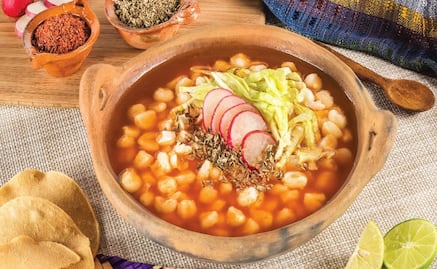
Many Mexican homes celebrate national holidays with pozole , a delicious traditional meal, but the origin of this Mexican dish has a bloody background dating back to Aztec culture .
For Mexicas, Xipe Tótec , Tlatlauhqui Tezcatlipoca or Red Tezcatlipoca , was considered the god of regeneration of corn and war .
He was also the deity of Spring , new vegetation, and fertility , besides being the patron of goldsmiths. According to pre-colonial mythology, he was the son of the divine couple, Ometecuhtli and Omecihuatl and is one of the four creators of the Universe.
According to the legend, Xipe Tótec sacrificed himself for humanity by gouging his eyes out and flayed himself while still alive in order to feed people with his own body. According to author Javier González , this story is a metaphor and, in reality, the flaying talks about removing the leaves, called totomoxtle , from corncobs.
Every March , there was a party in his honor called Tlacaxipehualitzi (men’s flaying). In this celebration, which lasted for 20 days , priests removed the heart of rival warriors caught in combat and flayed them to wear their skin.
Xipe Tótec was also offered the best corncobs with the objective of having good harvests . Here is when food comes into the picture, for during the celebration human meat was eaten with corn.
This was due to the belief that said that men were made from corn , so the dismembered bodies made reference to the grains . The bloody dish was only eaten by high priests during the ritual and is considered the antecedent of pozole.

The celebration shocked Spanish colonizers. According to Fray Bernardino de Sahagún in the General History of Things in New Spain , in these ceremonies, emperor Moctezuma was brought a huge dish of pozole with the thigh of a sacrificed prisoner.
Nevertheless, other versions say that the meat used in pozole was actually of Xoloitzcuintles , an ancient Mexican dog breed.

mp

Noticias según tus intereses
[Publicidad]
[Publicidad]