


Más Información
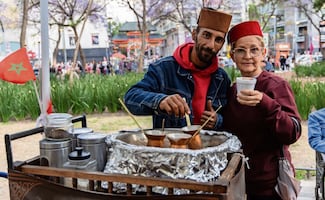






Street sellers pay up to 50 million pesos (US$3.1 million) a month in "fees" at Cuauhtémoc district in Mexico City.
The business starts with the sale of a space in the street that does not surpass two square meters (21 square feet).
"I paid 10,000 pesos," (US$620), said a young food vendor that started working at Doctores neighborhood three years ago. Another street seller said her husband paid 17,000 pesos (US$1,055) in 2004 for a space.
Additionally, street vendors have to pay a weekly fee, collected every Thursday or Friday. Food stands pay between 180 (US$11.1) and 250 pesos (US$15.5) a week, while those who sell beauty products pay between 150 (US$9.3) and 160 pesos (US$9.9).
Occasionally, they pay other "extraordinary" fees.
"In December we were asked to contribute 250 pesos for the delegate's gift," said one of the merchants, who complained about the payments demanded by their leaders. During Christmas time they pay an overprice and "they don't care if you are not selling well," a vendor said.
In addition to the monetary contributions, street vendors are expected to participate in political rallies.
"We are asked to attend rallies of the Democratic Revolution Party" (PRD), said one vendor, adding that the last event he attended was the campaign closing of Cuauhtémoc delegation head, José Luis Muñoz Soria.
"Each stand is expected to bring three people and if you don't go you are penalized. For example they don't let you sell for three days," he added.
Ricardo Monreal's plans
"Street vendors are a serious problem that has descended into anarchy, disarray," said Ricardo Monreal, who will replace Muñoz in October after winning the elections. "In the last 15 years it grew 600%," he added.
Monreal said that no new permits will be given to street vendors until the existing ones are regularized. He also plans to conduct a census, eliminate leaders and create a public trust fund owned by the vendors themselves.
Agustín Torres, head of Cuauhtémoc district from 2009 to 2012, says that Monreal's proposal is unworkable and "can unleash a war in the city, a real battle."
He added that the fees paid by vendors should go to the public coffers and not to the leaders' pockets.
Street vendors "are a mine of votes and money for the ruling Institutional Revolutionary Party (PRI) and the PRD," Monreal said.
He calculates that Cuauhtémoc leaders get between 40 and 50 million pesos (US$2.4 million and US$3.1 million) per month from them.

Noticias según tus intereses
[Publicidad]
[Publicidad]