


Más Información
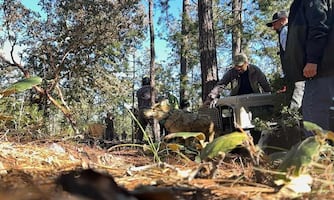







Despite being looted in 2012, the underwater cave of Chan Hol, in the Mexican southern state of Quintana Roo , has provided clues on the first human settlements in America – which are believed to date as far back as 13 thousand years ago.
This is the main conclusion of a study published by Plos One magazine, whose lead researcher Wolfgang Stinnesbeck from the Heidelberg University, in Germany, claims the now studied remains of the Chan Hol individual are approximately 13 thousand years old, which suggest the region was inhabited during the Late Pleistocene, making it the oldest settlement known in America.
In 2012, a human skeleton, known as Chan Hol, was found in a submerged cave near Tulum . Regrettably, the cave was looted one month after the discovery and now it's estimated that only 10% of the original pieces remain.
Despite the theft, the researchers managed to analyze the remaining pieces through several dating techniques, such as C-14 and U-Pb, and concluded that the remains confirm human presence in the continent and present evidence on the diet and mobility patterns of the prehistoric peoples who inhabited the Yucatán Peninsula.
On the identity of the individual, known only as Chan Hol II , scientists theorize it is the skeleton of a young man who died in the cave was intentionally not buried.
am

Noticias según tus intereses
[Publicidad]
[Publicidad]